Volume 1 • Issue 1 • Summer 2027 (Mock Journal for Demonstration Only)
Advancing Scholarly Exploration and Critical Dialogue Across Religious Perspectives
From the Editor
Welcome to the inaugural issue of the Independent Journal of Religious Studies. This journal was founded on a simple principle: quality scholarship should be evaluated on its merits rather than the institutional affiliations of its authors.
In an age where access to publication remains challenging for many independent researchers, we seek to provide a rigorous, peer-reviewed forum where emerging and established scholars alike can contribute to the advancement of religious studies. We welcome diverse methodologies, perspectives, and disciplines united by a commitment to evidence-based research and academic integrity.
This first issue reflects that vision, featuring original research spanning Ancient Near Eastern studies, Second Temple Judaism, Early Christianity, the Restoration Movement, and contemporary religious discourse.
— S. Bruce Nadeau
Editor-in-Chief
A discussion on the opportunities and challenges facing independent researchers within religious studies.
About the Journal
The Independent Journal of Religious Studies is a peer-reviewed academic publication dedicated to the advancement of scholarship in:
- Ancient Near Eastern Studies
- Hebrew Bible / Old Testament
- Second Temple Judaism
- Early Christianity
- Church History
- Restoration Movement Studies
- Mormon Studies
- Comparative Religion
- Religious Thought and Practice
The journal welcomes submissions from both independent researchers and institutionally affiliated scholars.
Citation
Independent Journal of Religious Studies
Volume 1, Issue 1 (Summer 2027)
ISSN: XXXXXXXXXXX
The Divine Council in Early Israelite Religion
James T. Reynolds
Early Israelite religion, when examined through a comparative ancient Near Eastern lens, reveals a conceptual framework that is more complex than later monotheistic formulations alone might suggest. This article explores the “divine council” motif as it appears in Hebrew biblical texts, situating it within a broader West Semitic cultural context. By comparing Ugaritic texts and early Israelite poetic passages, Reynolds argues that the imagery of Yahweh presiding over a heavenly assembly reflects an inherited theological structure rather than a later literary invention.
A key focus of the study is the semantic and narrative function of council scenes in texts such as Psalm 82 and 1 Kings 22. Rather than treating these passages as anomalies within strict monotheism, the article proposes that they represent an earlier stage of theological development in which divine hierarchy was expressed in relational and administrative terms. The evidence suggests a fluid boundary between monotheistic affirmation and earlier forms of monolatrous expression.
Ultimately, Reynolds contends that the divine council motif does not undermine later theological developments but instead provides essential context for understanding how ancient Israel conceptualized divine authority. The article concludes that recognizing this framework allows for a more historically grounded reading of biblical texts without imposing later doctrinal categories onto earlier materials.
Temple Symbolism in Second Temple Jewish Literature
Sarah M. Whitaker
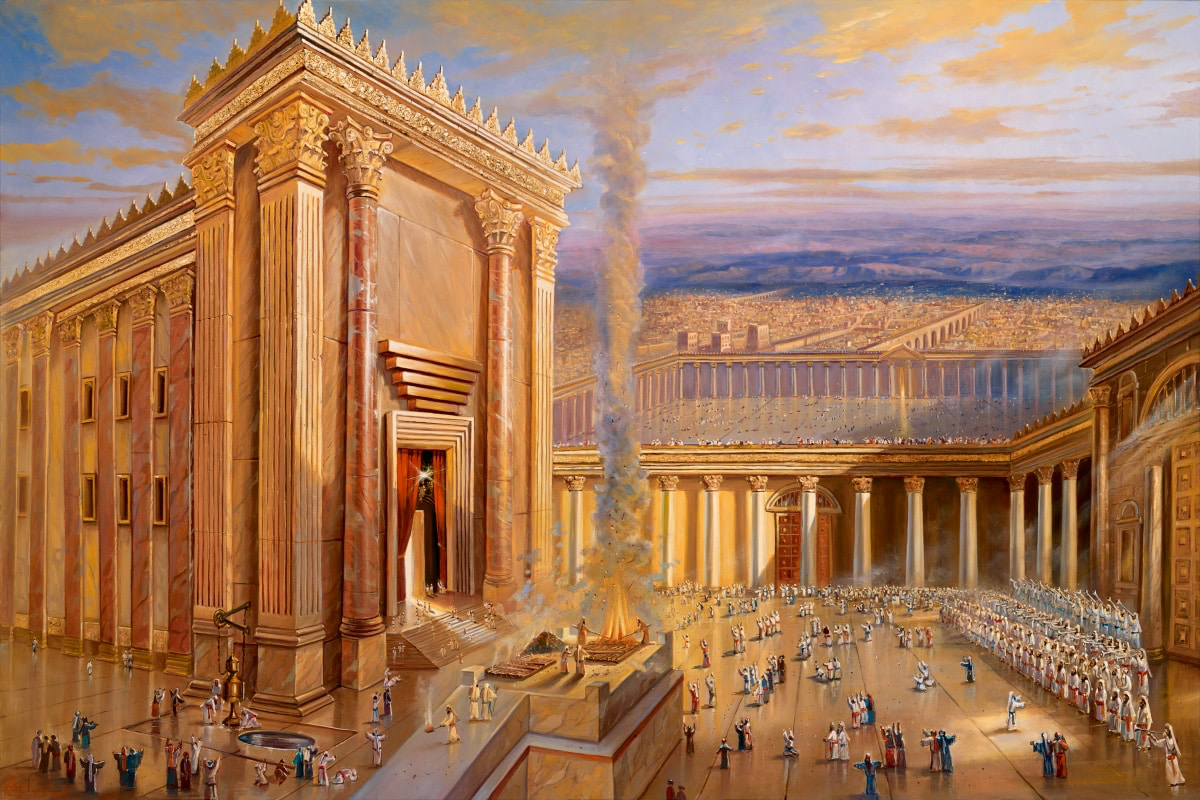
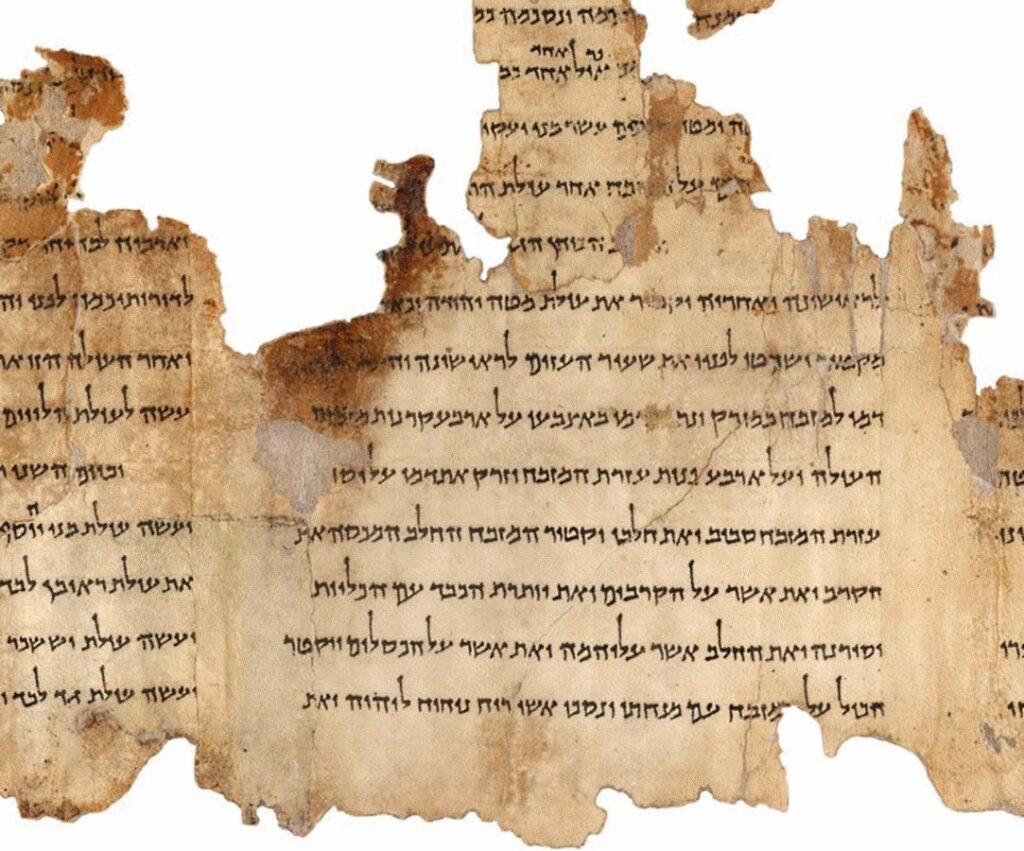
Second Temple Jewish literature demonstrates a highly developed symbolic vocabulary surrounding the concept of the temple, extending far beyond the physical structure in Jerusalem. Whitaker examines how texts such as 1 Enoch, Jubilees, and selected Dead Sea Scrolls reimagine the temple as both a cosmic and ethical reality. This symbolic expansion reflects evolving theological responses to exile, restoration, and purity concerns.
The article argues that temple imagery increasingly functions as a framework for identity formation among dispersed Jewish communities. Rather than being solely a cultic institution, the temple becomes a representation of divine order embedded in time, space, and human behavior. Whitaker highlights how ritual purity laws and visionary ascents both reinforce and reinterpret temple ideology.
In conclusion, the study suggests that Second Temple symbolism should be read as a dynamic system of meaning rather than a static religious inheritance. The temple becomes, in this literature, both a physical aspiration and a metaphorical blueprint for holiness, shaping communal and individual religious life in profound ways.
Reassessing the Historical Context of the Book of Daniel
Michael R. Stanton
The Book of Daniel has long occupied a contested position in biblical scholarship due to its complex linguistic features and apocalyptic structure. Stanton revisits the historical context of the text, arguing that its composition reflects a layered development rather than a single historical moment. Particular attention is given to the shift between court tales in the early chapters and the apocalyptic visions in the latter half.
By analyzing linguistic evidence, thematic continuity, and historical references, the article proposes a nuanced dating framework that situates portions of Daniel within different socio-political environments. Stanton emphasizes the importance of the Seleucid period in shaping the apocalyptic sections, while also acknowledging older traditional materials embedded within the narrative framework.
The study concludes that Daniel should be understood as a composite work reflecting evolving communal concerns about empire, identity, and divine sovereignty. Rather than being read as a unified historical document, it is more accurately interpreted as a theological response to sustained political crisis and cultural pressure.
Authority and Revelation in the Early Restoration Movement
Emily J. Carter
The early Restoration Movement presents a rich case study in the negotiation of religious authority outside established ecclesiastical structures. Carter explores how claims of revelation functioned as both a legitimizing force and a source of internal tension among early Restoration leaders and communities. The article situates these developments within broader nineteenth-century American religious experimentation.
A central argument of the study is that revelation in this context was not a fixed category but a contested process shaped by communal discernment, charismatic leadership, and textual engagement. The dynamics of authority were continually renegotiated as new revelations emerged and were interpreted within shifting institutional frameworks.
Carter concludes that the early Restoration Movement illustrates the instability inherent in movements grounded in ongoing revelation. Rather than undermining authority, this instability became a defining feature of the movement’s identity, shaping its doctrinal development and organizational structure.
Notes and Short Studies
A Newly Examined Cuneiform Parallel to Genesis Traditions
Stephen B. Kinsella
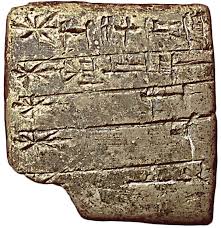
Recent work in cuneiform archives has brought renewed attention to a fragmentary text that appears to share thematic parallels with early Genesis narratives. This short study introduces the tablet, its provenance, and its most plausible readings, situating it within broader Mesopotamian mythological traditions. While the text is incomplete, several narrative motifs—particularly concerning creation order and primordial waters—invite cautious comparison with biblical material.
The article does not argue for direct literary dependence but instead explores the shared cultural environment in which such traditions developed. Attention is given to how ancient scribal communities reused and reshaped older mythic structures to address theological and cosmological questions. The parallels, therefore, are interpreted as part of a wider ancient Near Eastern intellectual landscape rather than evidence of direct borrowing.
In conclusion, the study emphasizes methodological restraint while acknowledging the value of comparative analysis. The fragment contributes to ongoing discussions about how Genesis traditions may have engaged, directly or indirectly, with earlier Mesopotamian conceptual frameworks.
Download Volume 1 – Issue 1 2027 Here